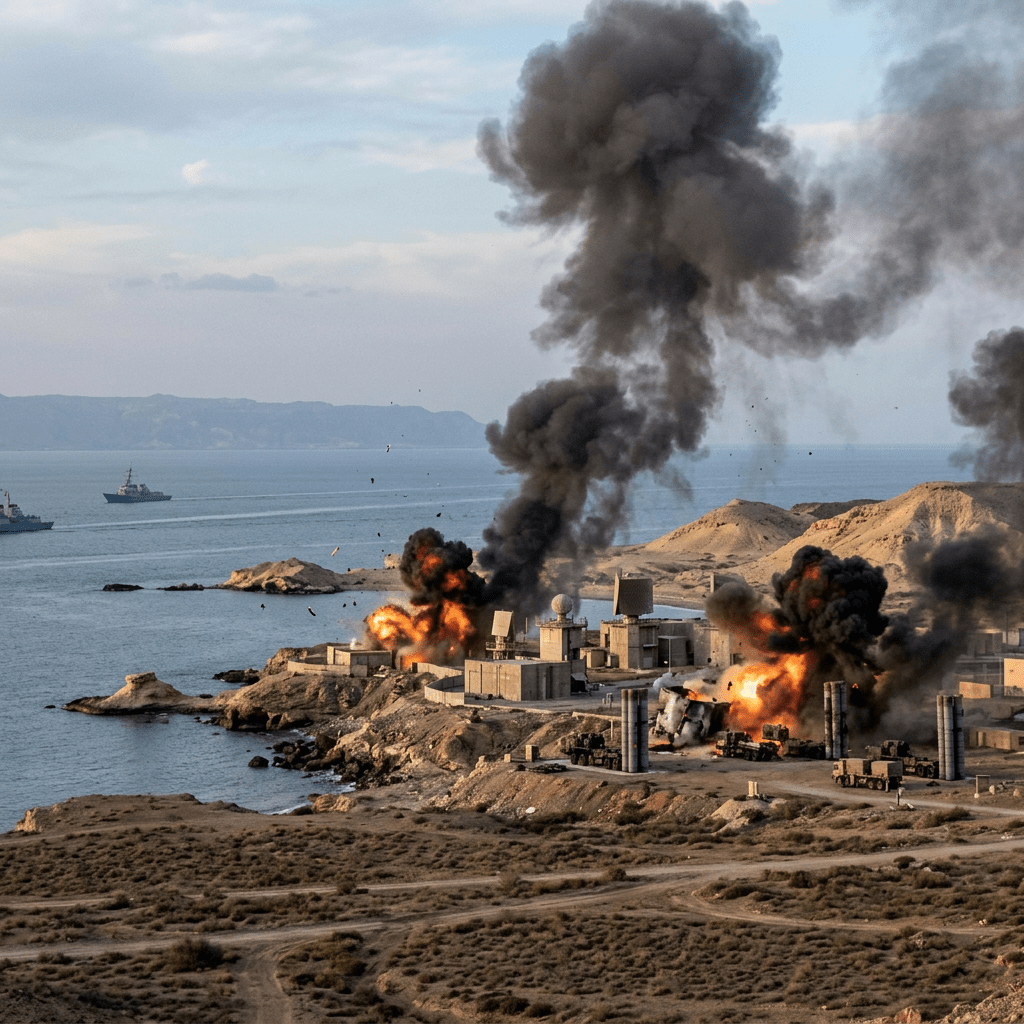
Optimism for a resolution to the conflict and the reopening of the Strait of Hormuz was checked after the United States said it had carried out strikes on missile launch sites in Iran.
Posted May 26, 2026 4:20AM ET
Global oil prices have seen a noticeable increase following recent U.S. military strikes in Iran, which have raised concerns over the stability of the ongoing peace negotiations in the region. The tension created by these strikes has prompted fears of further escalation, affecting market sentiment. Investors are closely monitoring the situation, as any disruption in oil supply from this critical area could lead to significant fluctuations in global prices. The delicate balance of the peace deal is now in jeopardy, which adds to the uncertainty in the energy market, compelling analysts to reassess their forecasts for the coming weeks. As the geopolitical landscape continues to shift, stakeholders in the oil industry remain vigilant for any developments that could impact their operations and investments.
Oil prices move higher.
- The price of Brent crude, the global benchmark for oil, rose nearly 3 percent to about $96 a barrel.
- Investors and analysts are focused on the continued disruption to shipping in the Strait of Hormuz, the narrow waterway between Iran and Oman that is a vital trading route for oil and natural gas that normally carries as much as one-fifth of the world’s oil supply.
Price of Brent crude oil
How much the international benchmark costsJan.Feb.MarchAprilMay020406080$100 per barrel
Global Oil Price Rises After U.S. Strikes in Iran Cloud Peace Deal – The New York Times
Notes: Data shows future contract prices for Brent crude oil. Gaps indicate nontrading hours. Data is delayed at least 15 minutes.
Source: FactSet.
The New York Times
U.S. stocks set to rise at open
- Futures on the S&P 500 pointed to a slight increase when stocks resume trading in the United States on Tuesday.
- Stocks in Asia, where countries import vast quantities of oil and gas, were mixed. Stock markets in Japan and mainland China were down, while South Korea’s benchmark KOSPI rose about 3 percent.
- In Europe, stocks were subdued. The Stoxx 600, a broad index that tracks the region’s largest companies, fell less than 1 percent, while the FTSE 100 in Britain was up about 1 percent.
S&P 500 index
How stocks are trading in the United States
May 220.37Jan.Feb.MarchAprilMay6,4006,6006,8007,0007,2007,400
Note: Data delayed at least 15 minutes.
Source: FactSet.
The New York Times
Gas prices tick lower.
- Gas prices edged down 1 cent on Tuesday to a national average of $4.50 a gallon, according to the AAA motor club. The cost for drivers has increased 51 percent since the war began.
- Gas prices don’t move in lock step with crude, usually trailing increases or drops by a few days.
- The average price of diesel fell 2 cents to $5.58, on Tuesday up 48 percent since the start of the war.
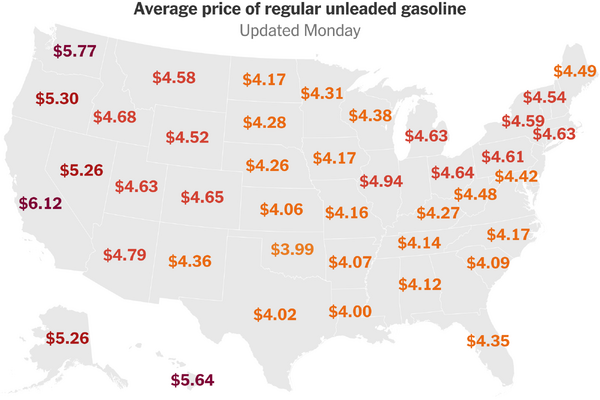
How High Are Gas Prices Where You Live?
Here is a county-level look at where drivers are facing the highest costs.
Read more via New York Times
 Media Air Base, LLC
Leave a comment