Understanding the ‘G’-Shaped Economy: Are We in One?
Posted June 1, 2026
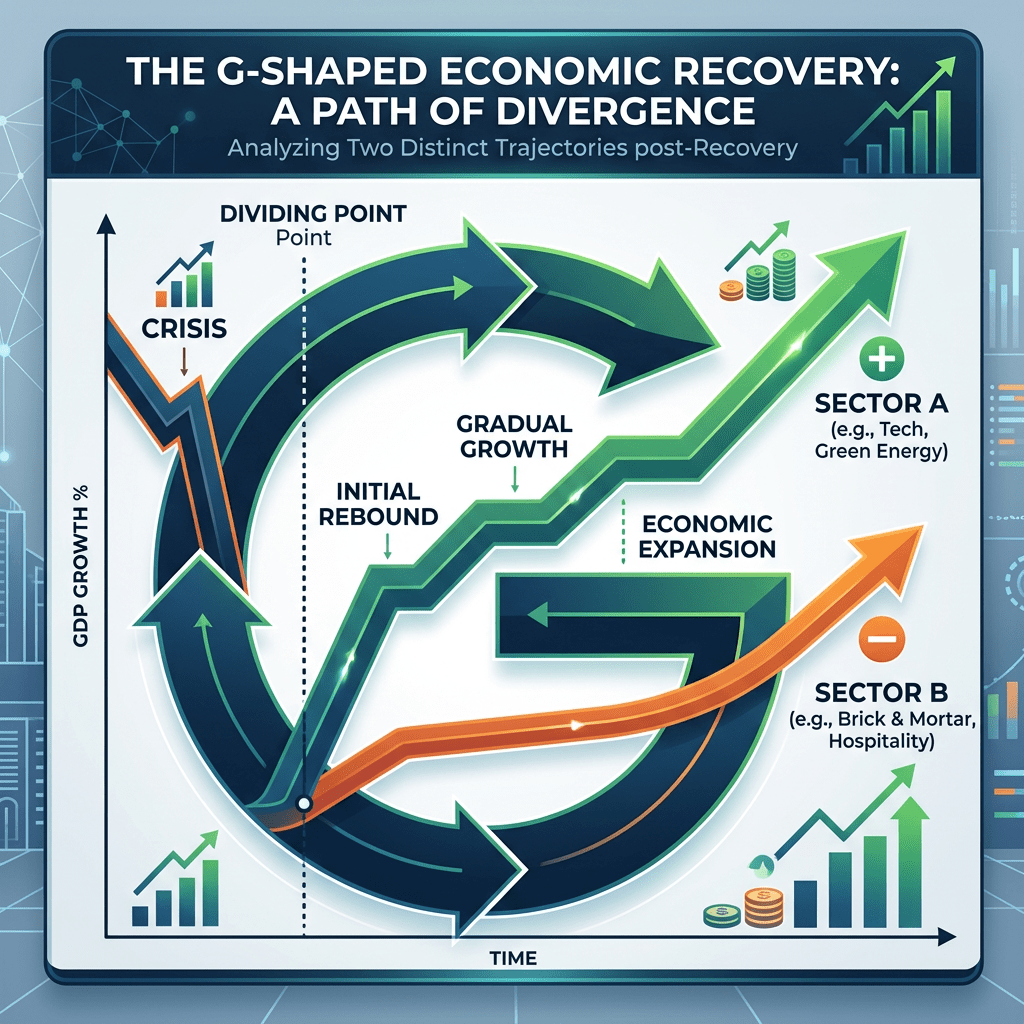
The term ‘G’-shaped economy describes a situation where economic recovery and growth are unevenly distributed across different sectors and demographics, creating a distinct bifurcated landscape. In this model, while certain industries and populations thrive, others languish, leading to increased inequality.
As we analyze the current economic climate, many experts argue that we may indeed be experiencing a ‘G’-shaped economy. The tech sector, for instance, has seen remarkable growth driven by digital transformation and remote work adaptations. Conversely, sectors such as hospitality and retail face significant challenges, struggling to bounce back fully from the impacts of recent global disruptions.
This uneven pattern suggests a need for targeted economic policies that aim to support the lagging sectors and promote inclusive growth. Addressing these disparities is crucial for fostering a more balanced economy where all segments can thrive, reducing the risk of long-term socio-economic divides.
As we move forward, it will be essential to monitor these trends closely and consider how we can work towards a more equitable economic environment for everyone.
Understanding the ‘G’-Shaped Economy: Are We in One?
The term ‘G’-shaped economy describes a situation where economic recovery and growth are unevenly distributed across different sectors and demographics, creating a distinct bifurcated landscape. In this model, while certain industries and populations thrive, others languish, leading to increased inequality.
As we analyze the current economic climate, many experts argue that we may indeed be experiencing a ‘G’-shaped economy. The tech sector, for instance, has seen remarkable growth driven by digital transformation and remote work adaptations. Conversely, sectors such as hospitality and retail face significant challenges, struggling to bounce back fully from the impacts of recent global disruptions.
This uneven pattern suggests a need for targeted economic policies that aim to support the lagging sectors and promote inclusive growth. Addressing these disparities is crucial for fostering a more balanced economy where all segments can thrive, reducing the risk of long-term socio-economic divides.
As we move forward, it will be essential to monitor these trends closely and consider how we can work towards a more equitable economic environment for everyone.
Read more via USA Today
 Media Air Base, LLC
Leave a comment